
 Image 1 of 2
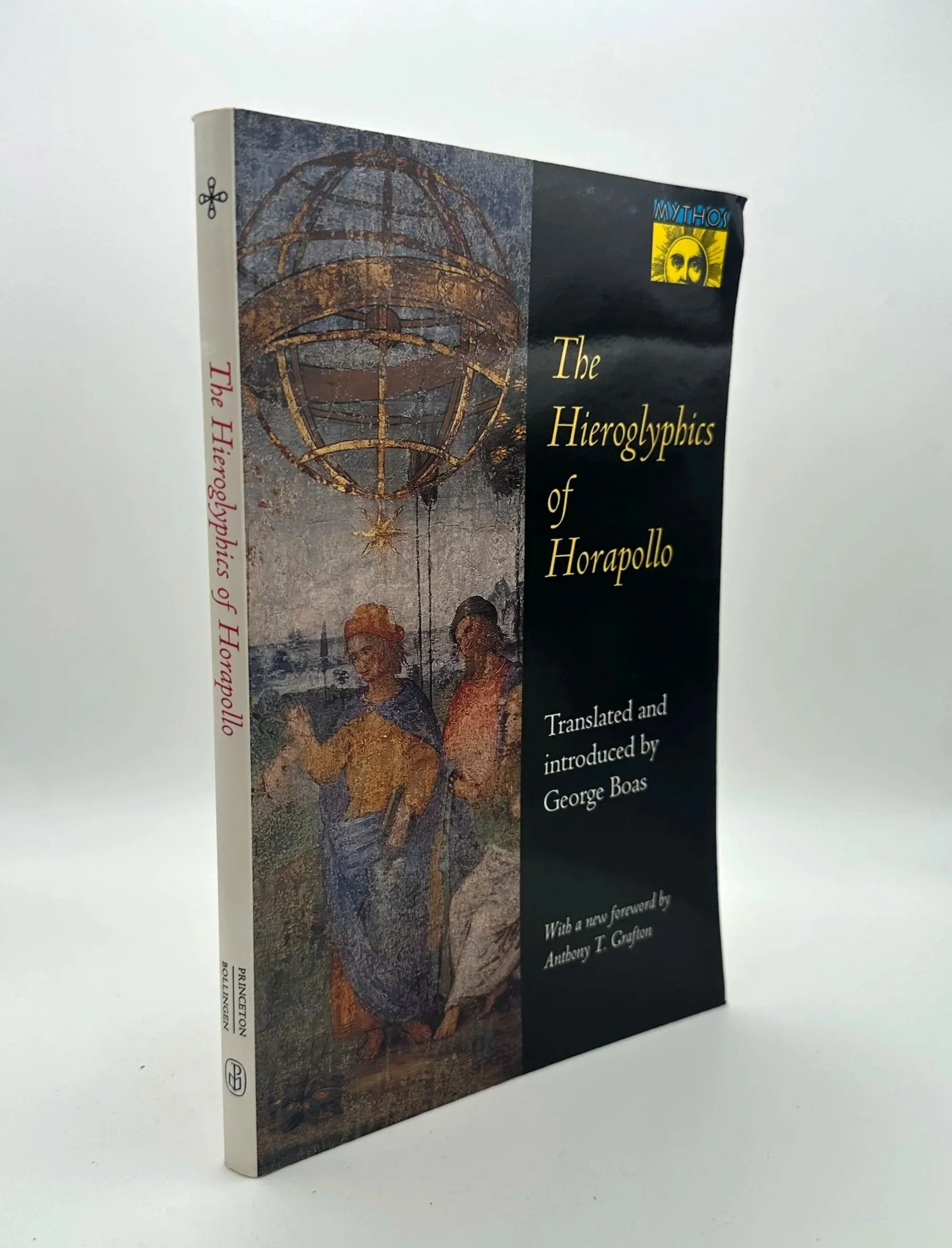 Image 2 of 2
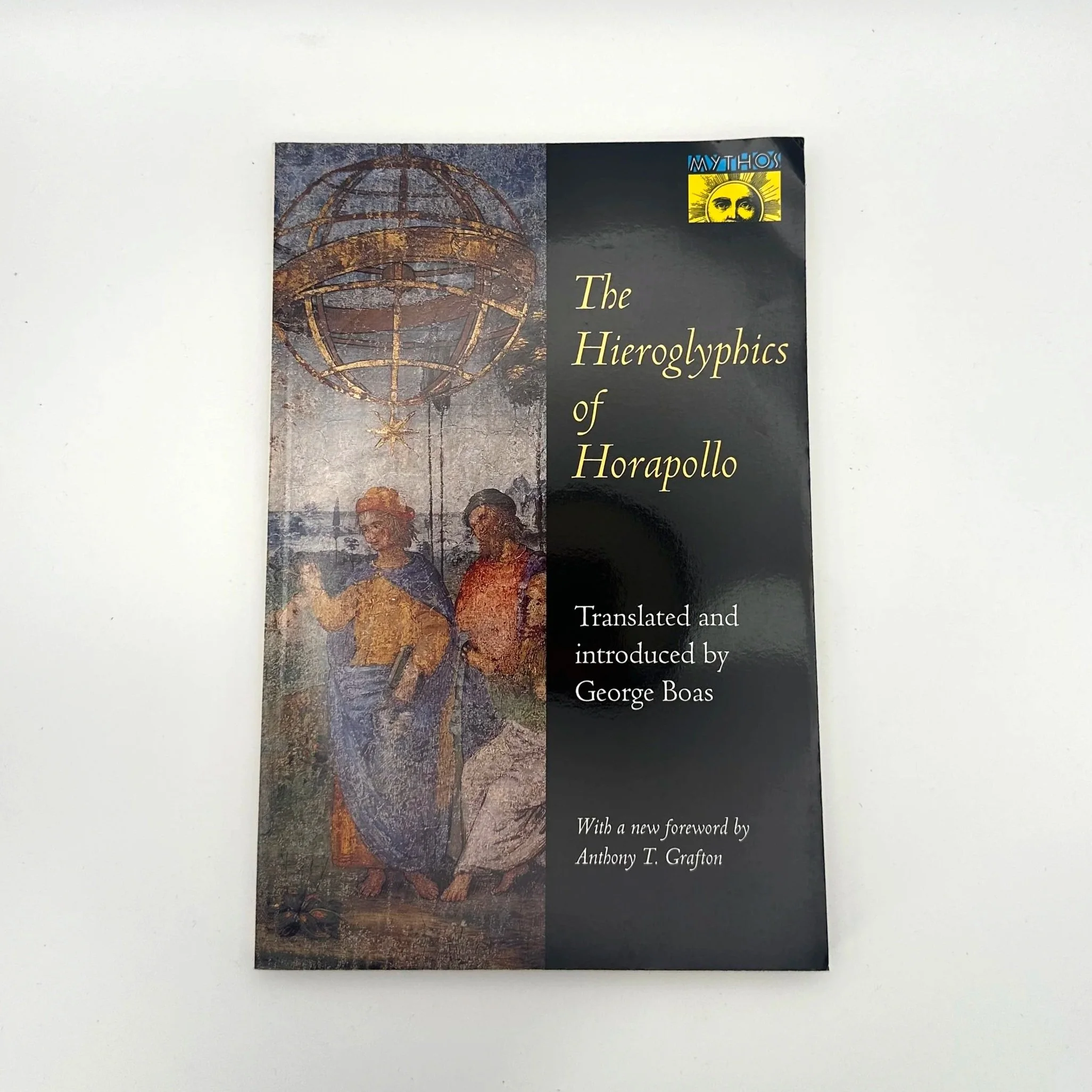
Title: The Hieroglyphics of Horapollo
Author: Horapollo Niliacus
Translator: George Boas (with a new foreword by Anthony Grafton)
Edition: Paperback reprint (first published by Pantheon Books, 1950)
Format: Paperback
Publisher: Princeton University Press
Series: Bollingen Series XXIII
ISBN: 9780691000923 (ISBN-10: 0691000921)
Language: English (translated from the Greek)
Pages: xxiv + 120 (148 including plates)
Dimensions: 23 x 15 cm
Publication Date: 1993
Genre: Symbolism, Egyptology, Mythology, Cultural History
Condition: Good
Description:
The Hieroglyphics of Horapollo is a classic anthology of nearly two hundred symbolic “hieroglyphics”, allegorical emblems said to have been used by the Pharaonic scribes to represent the natural and moral world. The work is attributed to Horapollo Niliacus, reputedly an Egyptian magus of the fourth century. It was translated into Greek in 1505 and shaped Western iconography from the sixteenth to the nineteenth century. It explains, for example, why a serpent swallowing its tail stands for the universe and why a stork stands for filial affection. George Boas’s translation includes an introduction on the work’s influence and on the Renaissance revival of symbolism. The illustrations are drawn from Albrecht Dürer’s own copy of a Latin translation. This 1993 Princeton paperback has a new foreword by Anthony Grafton and bibliographical notes and indexes.